
Reactive Dog Training in Kitchener and Waterloo
Lunging on leash. Growling over the food bowl. Freezing up around other dogs. We work with the cases other trainers turn away, and we build a plan around the dog in front of us, not a generic class.

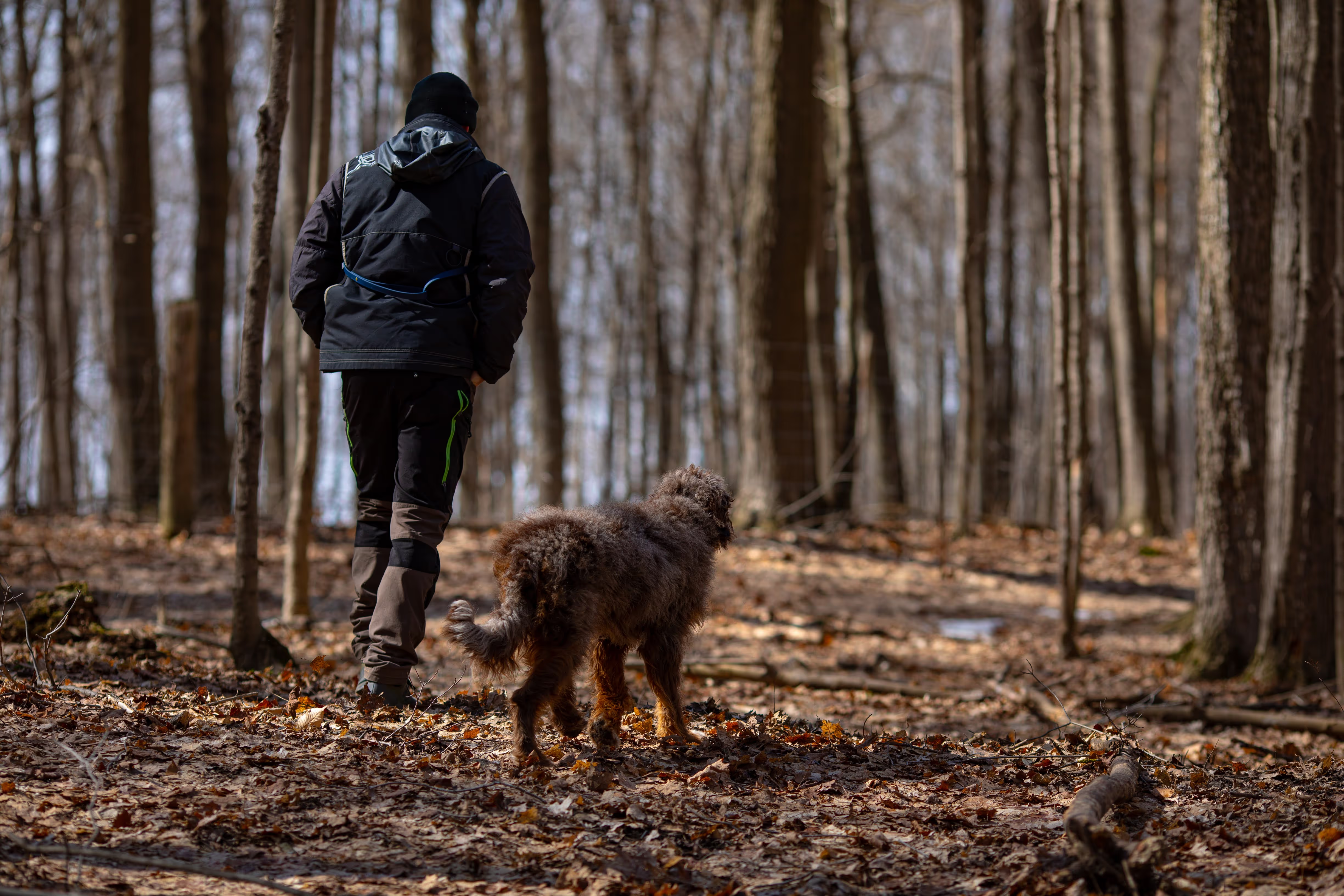
What we mean by "reactive"
Reactivity is an overreaction to something in the environment, another dog, a stranger, a bike, a delivery truck, that goes past normal alertness into barking, lunging, or shutting down. It is not the same as aggression, though the two often get lumped together and treated the same way.
Some dogs are reactive because of fear. Some are frustrated greeters who never learned impulse control. Some are guarding a resource, a bone, a bed, or a person. Each of those needs a different plan, which is why we start with a real evaluation instead of a one-size class.
Our lead behaviour trainers have worked cases referred to us after other programs stalled out, dogs labelled "too far gone" for group classes or standard obedience. Balanced training, with clear structure and consistent consequences on both ends, is what moves these cases forward.
The three cases we see most
Leash reactivity
Lunging, barking, or spinning at the sight of another dog or person on walks. We rebuild the walk itself, teaching your dog to check in and settle instead of fixate, using real neighbourhood streets and trails, not just a training yard.
Resource guarding
Stiffening, growling, or snapping over food, toys, bones, or a favourite person. We work in controlled stages so the dog learns that hands near a resource predict good things, not a fight, and owners learn to read the early warning signs.
Aggression rehabilitation
Bite history, resource-driven aggression, or dog-on-dog conflict in the home. These cases start with a private, in-person evaluation before we recommend a program; safety protocols and management come first, training comes second.

Structure first, then repetition in the real world
A dog that lunges at every jogger on a quiet training field but melts down on King Street hasn't actually learned anything. We do the early obedience foundation on-site, then move the work into the places your dog actually struggles: sidewalks, dog-friendly patios, the vet lobby, your own front hallway.
How we run a reactivity case
Behaviour modification
Our broader behaviour program covers the foundational counter-conditioning and structure work that most reactive and aggressive dogs need first.
Private sessions or day training
Once a dog is stable and predictable, we move into private one-on-one sessions or day training to add reps in the real environments where the reactivity shows up.
Reactive dog group class
For dogs ready to work at a distance around other dogs, our small reactive-only group class is the bridge between private training and normal off-leash life.
Common questions about reactivity training
Can a reactive dog actually be fixed?
Most reactive dogs improve significantly with the right structure and enough real-world repetition; "fixed" usually means the dog can be walked, greeted, and lived with calmly, not that every trigger disappears forever. We set expectations honestly at the evaluation based on the dog's history and the owner's daily life.
Is my dog reactive or aggressive?
Reactivity is an overreaction without intent to cause harm; aggression involves an actual bite history or clear intent to injure. We ask about bite history, triggers, and warning signs during the evaluation so we can tell you which one you are dealing with and why it matters for the plan.
Do you take dogs with a bite history?
Yes. Bite-history cases start with a private, in-person evaluation so we can assess risk directly and build a management plan before any training begins. We will tell you upfront if a case needs a muzzle-conditioning phase or a slower timeline.
Should I start with a group class if my dog is reactive?
Usually not right away. A dog that hasn't built foundational impulse control and threshold work first tends to struggle in any group setting, reactive-specific or not. Most owners start with behaviour modification or private sessions and move into our reactive dog group class once the dog can work at a distance.
How long does reactivity training take?
It depends on the dog's history, how long the pattern has been reinforced, and how consistent the household can be with the management plan between sessions. We give a realistic timeline at the evaluation rather than a blanket number, because a six-month pattern and a three-year pattern do not respond the same way.
Start With an Honest Evaluation.
Bring us the full history, triggers, bite reports, whatever you have. We will tell you what program actually fits your dog and what to expect, in person, before you commit to anything.

